


Explore the UC Davis Arboretum and Botanical Conservatory through gardens, plant collections, waterways and landscapes woven throughout the UC Davis campus.
This self-guided experience highlights some of the best places to see redwoods, California native plants, Mediterranean gardens and other distinctive plant environments while exploring campus.
Key Arboretum features
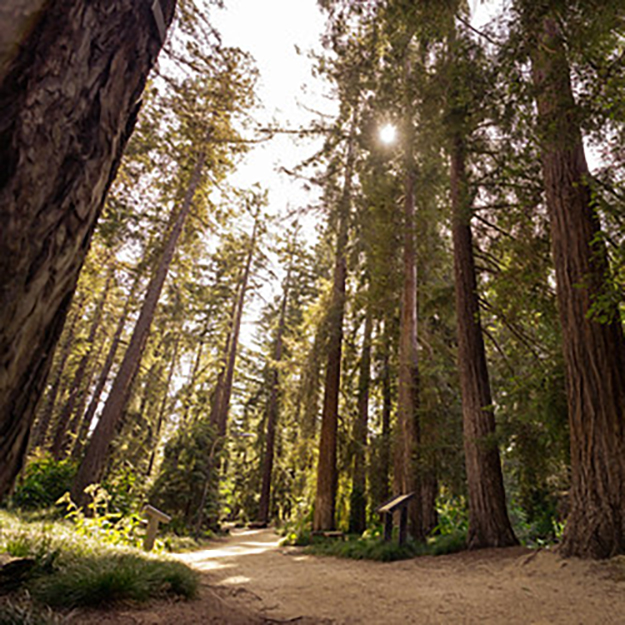
Redwood Grove
A shaded grove of towering coastal redwoods that creates a cool, quiet space within the campus landscape. The grove was planted in the 1930s and now includes mature trees that form a dense canopy overhead.

California Native Plant Garden
A garden showcasing plants native to California, highlighting seasonal change, drought adaptation, and habitat for local wildlife. It is used for teaching and demonstrates how native species respond to California’s Mediterranean climate conditions.

Mediterranean Collection Gardens
Plantings from regions with climates similar to California, including the Mediterranean Basin, Chile, South Africa, and Australia. The garden is organized by geographic region and is used in research and instruction on climate-adapted plant systems.

Putah Creek and riparian corridor
A restored creek system running through campus with walking and biking paths, seasonal water flow, and riparian habitat. The corridor supports native vegetation and provides habitat for birds, fish, and other wildlife.

Shoreline and open water areas
Open stretches of water and surrounding landscape that create quieter, expansive views within the Arboretum system. These areas are part of the campus water management system and change in appearance with seasonal water levels and maintenance cycles.
Learn more about the key features to see at the Arboretum
Related experience: UC Davis Botanical Conservatory

The UC Davis Botanical Conservatory houses more than 3,000 plant species from tropical, desert, and carnivorous ecosystems around the world. Compared with the open landscapes of the Arboretum, the conservatory's greenhouses offers a closer look at unusual and highly diverse plant collections used in teaching, research, and conservation.
The conservatory can be visited on its own or combined with an Arboretum walk for a broader plant and garden experience on campus. Self-guided visits are always free, though hours and access can vary depending on teaching and research activity, so checking current opening times before visiting is recommended.
Learn more about the UC Davis Botanical Conservatory.
Part of Everyday Campus Life
Together, the Arboretum and Conservatory provide access to a wide range of plant environments and landscapes across campus. Both spaces are integrated into the university’s teaching, research, conservation, and stewardship activities while also functioning as widely used public landscapes.
The Arboretum in particular is widely used and valued by students, faculty, staff, Davis residents, and the broader community as a public landscape for walking, biking, exercise, outdoor study, informal gathering, dog walking, and everyday recreation.
How to use this
- The Arboretum can be entered at multiple access points across campus
- Paths are open to the public and free to access
- An extensive network of paved, accessible pathways are available across most areas
- Spend as little as 30 minutes or extend into a longer self-guided visit
- The experience changes with seasons, weather and water levels
- Plan your walk with this map